30 December, 2011

30 December 1944

438th AAA AW BN
APO 230 % Postmaster, N.Y.
30 December, 1944        1100

Hello Sweetheart –

Saturday morning, reports to get out for today and also the end of the month and a lot of other things to take care of. One thing I don’t have to think about is my tux and whether or not my stiff shirt is back from the Chink’s – because we’re not going Formal tomorrow nite, dear. As a matter of fact – we’re just not going – but I can well remember the times when I was keyed up about such things.

There’s not much along the lines of New Year’s Spirit here at present – although I imagine a few bottles will turn up by tomorrow nite. No mail or anything again yesterday and we’re really starting to miss be coming thru soon.

Hopped around quite a bit yesterday, darling, but hope to take it a bit easier today. Will have to stop now, dear, but not before reminding you that all my love is yours and yours alone for always – sweetheart – just as I know yours is mine. Regards to all –

My deepest love, dear.
Greg.

* TIDBIT *

about Artillery and AAA
in the Battle of the Bulge


American artillery played a crucial part throughout the Battle of the Bulge. Without the battalions at Brig. Gen. Anthony McAuliffe's disposal, the defenders of Bastogne would probably never have been able to hold against the German attacks. The same was true across the Ardennes front, and although the artillery did not react strongly to the initial attacks on 16 December because the German bombardment disrupted communications and many units were hampered by having to displace rapidly to the rear to keep from being overrun, the guns soon came into their own. Bad weather also hampered observation of fire on the first day. Nonetheless, the artillery at Monschau literally stopped a German attack by itself, and in the V Corps sector, the 99th Infantry Division Artillery helped that green unit to hold its ground for two days, until the V Corps artillery on Elsenborn Ridge began to carry the burden. The weight of fire was tremendous: on the night of 17 December, for example, one V Corps infantry battalion was covered by a defensive barrage of 11,500 rounds. As the American defense solidified, particularly on the northern and southern shoulders of the German penetration, the artillery really began to make itself felt. By 23 December, the artillery brought 4,155 guns into action and fired 1,255,000 rounds of ammunition during the course of the battle.

In many cases, artillery did not need to destroy the enemy to have the desired effect. Often, artillery fire diverted the German attacks from their axis of advance and derailed the German scheme of maneuver, even without causing much physical damage. Most of the firing involved conventional artillery, although some 210,000 rounds of ammunition had been fitted with the new and highly secret VT (variable time) or POZIT fuse, which detonated the shell by external influence in close vicinity of the target, without explosion by contact. The VT fuze allowed artillery to detonate above ground, thus spending its effect much more effectively against troops in the open. Claims were made that the VT and POZIT fuse played an important part in winning the battle. The truth seems to be that, however effective such ammunition was, very little of it was fired before January 1945.

As at Bastogne, artillery took over much of the effective anti-tank combat, with 155-mm guns particularly successful in attaining mobility kills. Artillery was successful not just in the indirect fire mode, however, but also in direct fire. Post-battle examination of destroyed German tanks showed that many of them had been put out of action by howitzer fire. The Antiaircraft Artillery Gun Battalions assigned to the various corps played an important role as well. Trained to deliver indirect fire in the traditional artillery fashion, the AA gunners also had a 90-mm weapon that packed a powerful punch because of its high muzzle velocity. Antiaircraft batteries were therefore successful throughout the Ardennes in the anti-tank role. Once artillery spotter aircraft were able to fly, the gunners also had considerable success in breaking up concentrations of both tanks and troops before they were able to deliver attacks against American positions.

The many American artillery battalions would have been less effective, however, had they not been directed by the most effective fire direction system used by any nation during the war. American forward observers could call down an enormous weight of fire on their selected targets, mixing divisional and corps fires with the fires of the mortar units organic to the infantry regiments. Indeed, German commanders later criticized American artillery fire as "methodical, schematic, and wasteful." It was also true that American gunners sometimes allowed gaps to develop at division and corps boundaries where they failed to provide overlapping fire between zones. Nonetheless, the system functioned when it was needed, and the successful defense of Elsenborn Ridge by V Corps units (among many similar cases) depended on the accuracy and weight of the defensive concentrations that V Corps Artillery fired, particularly on the night of 17/18 December. Much of the artillery's effectiveness came from well-trained forward observers dedicated to their supported infantry and armor units, for "men counted as much as weight of metal," as the official historian wrote. In the 15th Field Artillery Battalion, to cite only one case, 32 forward observers out of a total of 48 became casualties in six days of battle.

29 December, 2011

29 December 1944

438th AAA AW BN
APO 230 % Postmaster, N.Y.
29 December, 1944       0945

Wilma, darling –

If I don’t get a hold of some air-mail envelopes soon I’ll have to write V-mail, dear. I’m pretty near down to the last one and our mail orderly has been unable to get any more. But one of these days there’ll be a whole new batch in. I’ve been rather fortunate in being able to write a letter at all this past week. I know a good many soldiers who haven’t been able to.

We’re still not getting any mail at all, although packages continue to come through. I got another one day before yesterday, totally unexpected, from a woman in Chicago who used to be a patient of mine when she lived in Salem. I don’t know where she got my address – although she used an old AP number 515 – remember it, dear? That makes ten packages in all and that’s not bad. I’m afraid, though, that a good many packages and letters will never get to us and a good lot of other soldiers due to circumstances out of our control and about which I can’t write. It’s a damn shame, too, and we won’t know for weeks whether we’re missing letters or packages. If I don’t acknowledge some of your letters from here in and for awhile, darling, you’ll know why.

The weather is icy but the snow which fell yesterday did not materialize to any great extent, and no one is sorry about that fact. It’s trying to clear up right now – but I doubt if it will.

I’ve just re-read your letter of 28 November which I’ve had for some time. You wrote that you imagined you were having a date with me that night, you read some of my letters and mentally answered them. You recalled school, canoeing, week-ends, Sunday Mornings, the Roger Smith –– all fragments of thoughts – which have run through my mind a thousand times since the time they were real events. And it was all in a four month’s span – which is the interesting part of it all – interesting because it proves we did have a very strong nucleus in those 4 months, and strong enough to have kept us together during all these months of separation. And it will keep us together no matter how many months intervene before we can be together once again. I wonder sometimes just how much I do know about you and you about me – and I end up satisfied that we’ve learned a good deal about each other in the months we’ve written each other. It doesn’t seem as if we take up many matters in our letters – but altogether I think we’ve been able to get a good cross-section of our likes, dislikes, interests and moods. Are you satisfied, dear? You’d better be – or I’ll sue!

And now – although I haven’t written very much, I’ll have to stop. A bunch of fellows have just arrived and I’ve got to go to work – such as it is. I don’t know what you’re thinking about all that’s going on these critical days, darling, but whatever it is, rest assured I’m taking good care of myself and I’m managing to stay one step aside from trouble.

My best love to the folks, dear – and so long for awhile.

All my deepest love –
Greg

* TIDBIT *

about The Siege of Budapest

According to Wikipedia:

In 1944, Hungary was an unwilling satellite of Germany. In March 1944, Hungary was attempting to quit the war, and was seen by Nazi Germany as reluctant to take sufficient measures against the Jews. Germany needed Hungarian oil wells located around Lake Balaton. On 19 March, the Germans launched Operation Margarethe and their armed forces (Wehrmacht) entered Hungary. The Hungarian Regent, Admiral Miklós Horthy, put Hungary's attempts to quit the war on hold.

CLICK TO ENLARGE PICTURES

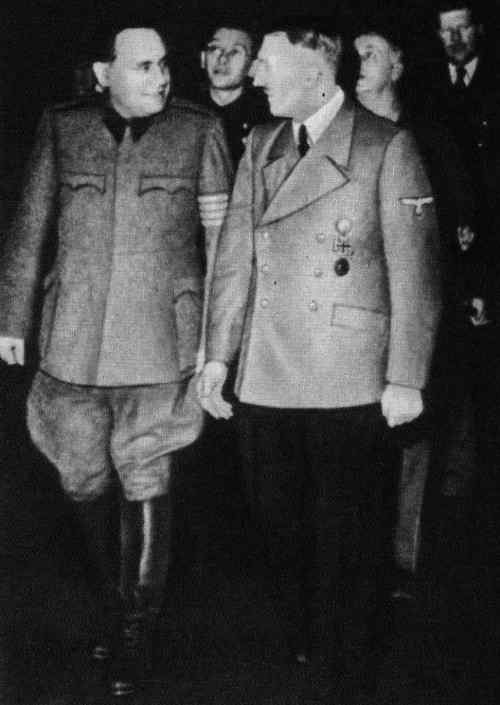
Horthy with Hitler

In October 1944, Horthy was caught negotiating peace with the Allies. The Germans launched Operation Panzerfaust (initiated to keep Hungary at Germany's side), on 16 October and forced Horthy to abdicate. Horthy and his government were replaced by "Hungarist" Ferenc Szálasi, from the Arrow Cross Party.


Szálasi with Hitler

On 29 October 1944, the Red Army started its offensive against the city. More than 1,000,000 men, split into two operating maneuver groups, advanced. The plan was to cut Budapest off from the rest of the German and Hungarian forces. On 7 November 1944, Soviet and Romanian troops had entered the eastern suburbs, 20 kilometers from the old town. The Red Army, after a much-needed pause in hostilities, resumed its offensive on 19 December. On 26 December, a road linking Budapest to Vienna was seized by Soviet troops, thereby completing the encirclement. The "Leader of the Nation", Ferenc Szálasi, had already fled on 9 December.

As a result of the Soviet link-up, nearly 33,000 German and 37,000 Hungarian soldiers, as well as over 800,000 civilians, became trapped within the city. Refusing to authorize a withdrawal, German dictator Adolf Hitler had declared Budapest a fortress city (Festung Budapest), which had to be defended to the last man. Waffen SS General Karl Pfeffer-Wildenbruch, the commander of the IX Waffen SS Alpine Corps, was put in charge of the city's defenses.


Pfeffer-Wildenbruch

Budapest was a major target for Joseph Stalin. The Yalta Conference was approaching and Stalin wanted to display his full strength to Churchill and Roosevelt. He therefore ordered General Rodion Malinovsky to seize the city without delay.


Rodion Malinovsky

On 29 December 1944, Malinovsky sent two emissaries to negotiate the city's capitulation. They never returned. Some German and Hungarian historians argue that the emissaries were deliberately shot by the Soviets. Others believe that they were in fact shot by mistake on their way back to the Soviet lines. In any case, Soviet commanders considered this act a refusal to negotiate and ordered an attack.

28 December, 2011

28 December 1944

438th AAA AW BN
APO 230 % Postmaster, N.Y.
28 December, 1944       1025

Good Morning, Sweetheart –

We’ve finally had a change of weather, and today it’s grey and snowing slightly. It looks as if it could develop into a real snowstorm. We’re comfortable where we are – and I can think back to my school days when I’d be looking out of the window as I am now – but seeing a different picture. I’m not anxious for a two foot snowfall. I don’t care if the pond is covered with snow or remains clean and good for skating; the same snow, the same frozen ponds – but what a difference beyond that! Why – I haven’t even got a pair of skates – or a sled!

I used to like to go tramping across the fields and woods of Franklin Park, usually with a couple of good friends. We’d talk about books we had read, about what we’d do when we got older, about traveling, – about almost everything, but never do I remember talking about war and the possibility of our ever being soldiers. Of the 3 of us who were close friends, one is now dead – committed suicide several years ago after a wild life which followed the death of his father. The other fellow became an engineer, went to California, married a gentile, has 3 or 4 kids and never got into the Army – and here I am. In those days – I never thought I’d ever study medicine; it always seemed to me that I’d end up in business with my father. Things work out quite a bit differently from the way we plan and although I can’t exactly say I planned anything, I just let things happen – and they happened.

I had no ideas about women; it wasn’t indifference, because if I saw a pretty girl I can remember being aware of it. Our gang just didn’t go out with girls – but the boys of 15, 16 and 17 weren’t going out as much in those days as they do now. As I grew older – I couldn’t help but crystallize some ideas about girls, women – about what I’d want in a wife. I knew I’d want to marry – because fundamentally, I was a lonesome sort of fellow and I knew I didn’t want to go thru life single. That was a selfish point of view, I guess, but looking at it from another aspect I figured that I could keep someone from being lonesome too, that I could make someone happy, that I could do a lot for the right sort of woman. That was pretty simple thinking – almost primitive – but if you leave out all the fancy words – isn’t that fundamentally the most important thing of all? I think it is.

Well, sweetheart, I went a long long time before I was able to meet the girl I want to make happy and who I know will make me happy. And if a couple can be happy – it means they get along, love each other, have common interests, have good friends, enjoy their home, want and have a family. I think you and I darling will be just such a couple. All we have to do is get this war over with and the rest will just follow naturally. That’s what I’m waiting for, dreaming of, concentrating on every minute of every day I’m away from you, darling. Always, always remember that.

Have to stop now, dear. I love you so much, I can hardly begin to hit the nail on the head, but you surely know it by now. Be well, darling, send my love to the folks – and for now, so long.

My everlasting love is yours
Greg

* TIDBIT *

about "Today in History"
from Pilsen, Czech Republic

From "City of Pilsen: From D-day to V-Day" on a former web site of the City of Pilsen, Czech Republic, came this status summary for 28 December 1944...

General Eisenhower, the supreme commander of the Allied forces in Europe, and Field Marshall Montgomery held a meeting in Hasselt to discuss plans for the next offensive. Meanwhile in the Ardennes, there was still heavy fighting against Hitler's intention to win a route to Antwerp. The Germans were slowing starting to lose steam, though, not only due to increasing pressure from American as well as British troops, but also due to entirely banal reasons – such as the lack of fuel for the Nazi's Panzerwaffe.

The 8th Infantry Division from the Ninth Army's XIX Corps finished mopping up the salient south of Obermaubach.

The 1st Infantry Division from the US First Army's V Corps deflected the enemy's swift attack that attempted to push its units out of defense positions on the Elseborn Ridge. There was relative quiet that day in the operational zone of the XVIII Airborne Corps. Units from the 9th Armored Division's Combat Command B and the 28th Infantry Division's 112th Infantry Regiment were moved in to support the 3rd Armored Division and the 75th Infantry Division. The VII Corps' 75th Infantry Division, currently without the 289th and 290th Infantry Regiments, was reassigned to the XVIII Corps. The Germans broke through the sector under the 3rd Armored Division's Combat Command A and occupied Sadzot, but were pushed back by a swift counterattack. The 83rd Infantry Division relieved the 2nd Armored Division in its positions and took over the sector east of the Buissonville – Rochefort line. The 2nd Armored Division later started to regroup.

CLICK TO ENLARGE PICTURES

Troops of the 28th Moving on 28 December 1944

The US Third Army's 11th Armored Division was released from reserve and placed under the command of the VIII Corps. In the course of the day, the III Corps created a limited advance against enemy delaying units in the area between the Sauer and Wiltz Rivers. Continuing to advance to the southern flank of the German breakthrough, the 35th Infantry Division came under heavy enemy artillery fire southwest of Villers-la-Bonne-Eau. The 26th Infantry Division attempted to break through to Wiltz, but did not achieve any greater success. Part of the 80th Infantry Division that was attached to the 4th Armored Division returned back to its parent division while the 6th Armored Division was reassigned from the XII Corps to the III Corps. In the meantime, the XII Corps received an order to go on the defensive. During the day, the 80th Infantry Division deflected a counterattack led against its units' defense positions near Ringel.

On December 28, 1944, a sizable formation of American bombers from the Fifteenth Air Force once again appeared over the skies of the Protectorate of Bohemia and Moravia. The targets of the huge formation of 360 four-engine bombers and 480 fighters were the gasoline refineries in Pardubice, Kolín and Kralupy nad Vltavou as well as a fuel storage facility in Hněvice, a small town near Roudnice nad Labem.


Main Square of Pardubice, Czech Republic, today

Part of the formation also headed over the Bavarian city of Regensburg. American bombs caused greater damage mainly to the targets located in Kolín and Pardubice. The fighter escorts, which absolutely outnumbered any potential defense from the German Reich, assailed land targets – first and foremost including railroad transport. This was one of the first very serious warnings for residents of the Protectorate. Once the front had neared, not a day would pass without fighter aircraft sporting white stars on their wings appearing over Bohemia. The aircraft fired at everything that moved along the roads and the railroads. Transportation would grind to a halt and the number of civilian casualties would rapidly rise. On this day in December, the Americans lost at least one fighter aircraft in the territory of pre-1938 Czechoslovakia. A P-51D Mustang from the 325th Fighter Group crashed in Pelhřimov. The pilot, 2/Lt William C. Margets, died of his injuries in the local hospital.


Pelhřimov, Czech Republic, today

27 December, 2011

27 December 1944

438th AAA AW BN
APO 230 % Postmaster, N.Y.
27 December, 1944        1330

My dearest darling –

It’s another clear, cold crisp day with not a cloud in the sky. Certainly the Air Corps can’t complain. It’s the nicest stretch of weather we’ve had since we first arrived in Normandy and it comes at an opportune time.

I’ve been here at battalion all day so far and I think I’ll be sticking around for the rest of the day, anyway. We were busy this a.m. – here at the Dispensary and took care of quite a few civilians, too. We had a B.C.’s meeting the latter part of the morning – the meeting being chiefly devoted to Orientation. Later this afternoon I have several house calls to make – a sick kid, a woman with phlebitis, a boy with a bad Rheumatic heart etc. Our evenings here are uncertain; last night we sat around and waited; tonite we’ll try to play some cards, I guess. The mail continues to be elusive – but we expect that. The only letters I want are those from you and my folks, darling. I still have about a dozen letters to answer but I haven’t the time or the desire, for that matter.

I still have a couple of your letters as yet unanswered, sweetheart – and that reminds me, I want to take exception to a statement you once made in reference to my failure to answer some of your questions. Darling – I answer every one of them, sometimes vaguely, I know, due to necessity, but I always mention the subject. I never destroy one of your letters before re-reading it and making certain that I’ve covered every subject. And that reminds me – your mention of dog-tags and changing them with others – seems to affect the infantry more than any other branch of the service. Don’t worry, mine are around my neck at all times, dear. And another thing – give one of my T3 Sergeants credit for packing the clock; all I did was to watch and advise. I wonder how that clock is going now and whether you’ve grown to like it or not.

Say – your cigarette shortage must really be something. If nothing more – I hope it makes you smoke less – and your mother, too. I have a sneaking suspicion, darling, that you must be smoking more than is good for you. We get a pretty good supply here – with our rations and therefore, gratis. I had quite a supply at one time – Camels and Chesterfields – but I couldn’t send them home to you, Sweetheart, because they’re tax free and not mailable. I don’t smoke a pack a month but I have used them for getting my laundry done etc. Incidentally – I had quite a bunch of dirty laundry, O.D.’s, field jackets etc and I’m getting them washed in this town. The women come to the Aid Station and ask if we want our laundry done. Imagine that! After they talk us into it – we say “Yes!”

You wrote (28 Nov) that you sat around one evening, all dressed up, smoking cigarette after cigarette, listening to the radio, perfume and all (what perfume?) and you ended your sentence thus “ – and I was ready”; ready for what, darling –– and you shouldn’t write like that – because you make me feel like jumping out of my boots and heading straight for home – which, of course, I feel like doing anyway. But – boy – oh boy! When you write “I’m ready” – you don’t know what you’re in for – so beware! I’m ready too, darling, and – well what’s the use. I’ll tell you when I see you. For now – I’ll say only that I love you, darling – and that I’ve been ready for a long long time. Love to the folks, dearest –

And my sincerest love –
Greg

* TIDBIT *

about More from General Hodges

The snapshots that follow were taken from Normandy to Victory: The War Diary of General Courtney H. Hodges & the First U.S. Army, maintained by his aides Major William C. Sylvan and Captain Francis G. Smith Jr.; edited by John T. Greenwood, copyright 2008 by the Association of the United States Army, pp.238-241.

CLICK TO ENLARGE

26 December, 2011

26 December 1944

438th AAA AW BN
APO 230 % Postmaster, N.Y.
26 December, 1944      1430

Wilma, darling –

I’ve just returned from Dog Battery, having spent all morning and the early part of the p.m. there. I should have been there the past two days also – but I couldn’t make it.

And today is just like you’d expect the day after Christmas to be – more quiet and subdued. So I’ve spent two Christmases away from you and home – sweetheart. Gosh – it’s really 3 of them away from home – because I was on maneuvers 3 yrs ago and had my pick of Christmas or New Years for my Leave, and I took the latter. It surprises me how used to things a fellow can become. I guess it’s because even mental resistance seems futile after awhile and you begin to realize that there’s not a goddam thing you can do except to have patience. And that’s what I’m trying to have, darling. I suppose the Christians mind being away on Christmas more than I do – but it’s just the idea of it’s being a Holiday that I mind.

Our present set-up perhaps helped us through Christmas more easily than had we remained at our last C.P. The natives here were wonderful to us and they were coming in all day with bottles of wine, cognac and liqueur – and of course they had to insist that we drink it. By 5 o’clock we were feeling pretty high. Pete came into Battalion mid-afternoon, sent his love, and had a couple of drinks. We had our Turkey dinner – not quite with all the fixings – in the evening. It was well roasted and well enjoyed. We played a little Bridge later on and then to bed.

The best part of yesterday, darling – you’ll never guess – I received a, one (1) letter from you, dated the 1st of December, and believe me, dear, it was nicer than any Christmas gift I could get. It was the first and only letter I’ve received in some time and came unexpectedly. I found it very interesting, too, dear – because you discussed somewhat in detail things about your folks. I didn’t get to know your folks very well due to the shortness of time but I depended on my ability to make good judgements and I know I wasn’t wrong. Your letter helped me get a clearer picture of some of the things I didn’t know and about which I’ve sometimes wondered. The very first important thing I liked them for was their fairness in allowing us to become engaged. That – in my mind – took a little courage and a good deal of broadmindedness – and I admired them for both.

You mention that your mother is hypersensitive and I wonder if she’s always been that way or only in recent years. Women often get that way at about you mother’s age. You say that in spite of all her faults – you love her, dear, and that I’ll feel that way, too. Well – she may have faults that you didn’t mention; what you did enumerate were characteristics, not faults – and I’m certain, too, that I’ll love her for what she is.

Being in a rut – is another thing entirely and it’s difficult to say what causes a married couple to get that way. Usually it’s the fault of both sides because if one half has the energy he can usually persuade the other to “get going”. I hope we never get that way, darling, and I doubt if we will. I don’t think it would make any difference what profession I was in. I like to get around, visit, go places and I know you’ll be the same. As a matter of fact – the medical profession is a handicap to all that but I hope it won’t get in our way.

I think your dad is swell and as regular as they come and what you have to say about his disposition gibes with my own impressions. All in all I know we’ll get along. I guess I have plenty of faults of my own – but I’ve never had much difficulty in getting along with people and when those people happen to be my relatives – I know all will be swell.

You also ask me in the same letter – how I can bear this war, and the fighting and the suffering. I honestly haven’t suffered a heck of a lot myself although I’ve seen my share of it and perhaps have been near enough to it. But if I stand it – it’s because I too have faith that all will be well, that I’ll return safely, that we’ll be married and will get out of life what we want. I’ll repeat again, darling, that this war would have been infinitely more difficult for me had I not met you, learned to love you, became engaged to you and always remembered that you were at home and willing to wait for me. For that, darling, I thank God – and you.

Have to stop now, dear. Hope to write again tomorrow. My love to the folks – and

All my sincerest love,
Greg

* TIDBIT *

about The Third Army to the Rescue

This summary was found on Dave Depickere's web site which was called World War II, analyzed!: "The Battle of the Bulge: The Third Army in the Bulge", which is no longer found on the web.

When Eisenhower and his staff at SHAEF began to worry that they had underestimated the ability of the Germans, they feared that the Germans might be able to use their massive offensive to go to the north and west to capture the cities of Liege and Antwerp. Liege was extremely important because the Allies had large supply dumps there. If the Germans managed to seize those supplies, they could possibly push the Allies back to the coastline, causing them to lose all the ground they had gained. Antwerp was important because it was a port city. If captured, the Germans could use it to bring in badly needed supplies.

At a special meeting of all the highest ranking generals in the American, British, and Canadian armies, it was decided that the toughest job would go to General Patton and his Third Army. They would have to relieve the soldiers who had been surrounded by the Germans at the Belgian city of Bastogne. After the meeting, Eisenhower, who had just been promoted to the five-star rank of General of the Army, was talking with General Patton. He remarked, "George, every time I get promoted I get attacked." Patton shot back with the comment, "And every time you get attacked, I pull you out!"

While the 101st Airborne Division, commanded by Major General Maxwell D. Taylor, was holding out and fighting off the fierce attempts by the Germans to overrun Bastogne, the Third Army had to stop a full scale attack they had started to the east, pull back the entire army, swing around ninety degrees to the north, and then begin another full scale attack on the southern flank of the German forces. Nothing like that had ever been done in the history of warfare. Everyone thought it was impossible except General Patton. He knew his men could do the impossible.

It only took three days for the Third army to perform that massive maneuver. Today, military historians readily admit that only Patton's Third Army could have accomplished a maneuver like that and make it look easy. Patton always demanded more from his soldiers than other commanders did and they never let him down. One of the reasons the Third Army performed so well is because they expected the German attack. While Eisenhower and his friends were playing cards in London and the First Army turned part of their area into a R & R (Rest and Recuperation) area, Patton's intelligence officers were hard at work.

The events leading up to the Battle of the Bulge have, like the Falaise Gap and Operation Market-Garden, become controversial issues. Many people believe that Eisenhower's staff at SHAEF made poor decisions when they ignored Third Army reports about a possible German offensive in the Ardennes. Colonel Oscar Koch, head of Third Army's G-2 Intelligence department, had sent intelligence reports warning SHAEF that the Germans were probably planning a major attack against the First Army's R&R area. His report was ignored. They refused to believe the Germans could collect the mass of weapons, men, and material to launch a large attack. It was a classic case of under-estimating the enemy. At Colonel Koch's suggestion, General Patton gave the order for his staff to design two separate plans in the event of a German attack. General Patton believed Colonel Koch and considered him to be the best G-2 in the European Theater of Operations.


Colonel Oscar Koch
"The best G-2"

When Patton attended the meeting with the other Allied commanders he told them he could attack in two days with at least two divisions. Everyone thought he was crazy, but he told them that he had already set plans in motion before he left his headquarters. All he had to was place a phone call. When it was finally decided that he should attack as soon as possible, he phoned his headquarters and said, "Nickel." The attack was on. The General never returned to his headquarters. Instead, he and his driver, Sergeant Mims, began traveling along the roads where he knew he would meet his soldiers heading north. He gave orders on the spot and told everyone he met to head north and kill Germans. Sergeant Mims once said to Patton, "General, the army is wasting a lot of money on your staff officers. You and I can run the whole war from your jeep."

While watching his men heading toward the Germans surrounding Bastogne, he said, "No other army in the world could do this. No other soldiers could do what these men are doing. By God, I'm proud of them." By this time, urgently needed snow camouflage for both troops and vehicles was being quickly supplied. Because of the problem of tanks slipping on the icy terrain, supply troops had installed special cleats on the treads of the tanks, much like the cleats on athlete's shoes.

At 1650 on the 26 December 1944 Company C, 37th Tank Battalion, a 4th Armored Division Task Force of Patton's Third Army, commanded by Major General H.J. Gaffey, made contact with the soldiers at Bastogne. Here is how it happened according to "The Cobra King Project" page of the "Armor for the Eagles web site:

On the road from Assenois to Bastogne, Belgium, Lt. Boggess, commander of an M4A3E2 Jumbo Sherman named Cobra King was leading a relief column to the surrounded soldiers in Bastogne during the Battle of the Bulge.


The crew of Cobra King near Bastogne, Belgium
after breaking through enemy lines on 26 December 1944

Cobra King was way ahead of the rest of the column and had just destroyed a German bunker along the road when Boggess spotted several uniformed figures in the woods near the bunker. They wore the uniforms of U.S. soldiers, but knowing how Germans were disguising themselves as Americans, he maintained a wary eye. "Come out here, come on out. This is Fourth Armored," he shouted to the figures. After no response, he called out again and one man approached the tank. "I'm Lieutenant Webster of the 326th Engineers, 101st Airborne Division. Glad to see you."

25 December, 2011

25 December 1944

438th AAA AW BN
APO 230 % Postmaster, N.Y.
Belguim
25 December, 1944       1040

My dearest Sweetheart –

A Merry Christmas to you and to the folks and I hope you spend a very pleasant day. It’s a clear, cold, sunny day here – and it has been so for the past 3 days – and believe me, darling, the clear weather is certainly appreciated. It’s the first cold weather we’ve had in a year – but a good dry cold and nowhere near as hard to take as the raw mess of an English winter. Dressed warmly – it’s really exhilarating – and we have enough clothes to dress warmly.

A good many things must be obvious to you by now, dear, but the whole story will have to wait for some time in the future. The fact is – that all goes well with us and things could be a whole lot worse.

I wasn’t able to write you or the folks yesterday, sweetheart – but that was to be expected. Today things are a bit more settled and I’m getting a fairly early start; I say fairly early because I didn’t get up until 0900 and that’s about the latest I’ve stayed in my sleeping bag for over a year. The reason is that we were up until 0130 last nite – or rather this a.m. – and believe it or not it was because we were celebrating Christmas Eve. We started playing Bridge at 2200, played until shortly before midnight. We drank some Scotch, sang Christmas Carols, ate melba toast and boneless chicken, lobster, peanuts, peanut butter sandwiches, etc. So you see, darling, war or no war – we manage to celebrate. The boys just turned the radio on and I hear President Roosevelt addressing the troops. It’s 1105 now and it’s good to hear his voice; it makes me feel as if I were at home again. How I’d love that, sweetheart! Just for a little while, at least – to see you again, to hold you tightly, look at you, talk with you, love you. I could go on after that so much more easily.

We’re living in a house – and lucky to get it, too. It’s not as warm as we’ve been used to – but good enough. One thing that’s different is the number of civilians that keep coming into our station – just to visit, say ‘hello’, thank us, wish us well. They’ve been coming in all this morning and two men are sitting near me now jabbering away. One just asked me what I was writing and to whom. I said I was writing to my fiancée and I showed them your picture, dear and they told me to write you that you are a ‘belle mademoiselle’ – so there you are.

The Colonel was just in wishing the Medical detachment a Merry Christmas. He stayed only a couple of minutes. This place is noisy and confused and I’m now beginning to wonder what this letter sounds like, darling. Whatever it reads like, dear, I mean to convey to you that I love you strongly, miss you just as strongly and as usual – feel worse about being away from you on Holidays. Somehow or other – it always sees more acute then.

That’s all for now, sweetheart, it’s too noisy to write much more. I hope you’re having a swell day at home. Wish your folks and Mary a Very Merry Christmas and a Happy New Year, give them my love and for now, so long.

All my everlasting love –
Greg

* TIDBIT *

about FDR's Address to the Nation
Christmas 1944

Greg heard Franklin D. Roosevelt address the troops on the radio on Christmas Day. The nation heard a speech as well. Here is that address, taken directly from The American Presidency Project's site containing Franklin D. Roosevelt's Address to the Nation, 24 December 1944.

It is not easy to say "Merry Christmas" to you, my fellow Americans, in this time of destructive war. Nor can I say "Merry Christmas" lightly tonight to our armed forces at their battle stations all over the world- or to our allies who fight by their side.

Here, at home, we will celebrate this Christmas Day in our traditional American way- because of its deep spiritual meaning to us; because the teachings of Christ are fundamental in our lives; and because we want our youngest generation to grow up knowing the significance of this tradition and the story of the coming of the immortal Prince of Peace and Good Will. But, in perhaps every home in the United States, sad and anxious thoughts will be continually with the millions of our loved ones who are suffering hardships and misery, and who are risking their very lives to preserve for us and for all mankind the fruits of His teachings and the foundations of civilization itself.

The Christmas spirit lives tonight in the bitter cold of the front lines in Europe and in the heat of the jungles and swamps of Burma and the Pacific islands. Even the roar of our bombers and fighters in the air and the guns of our ships at sea will not drown out the messages of Christmas which come to the hearts of our fighting men. The thoughts of these men tonight will turn to us here at home around our Christmas trees, surrounded by our children and grandchildren and their Christmas stockings and gifts—just as our own thoughts go out to them, tonight and every night, in their distant places.

We all know how anxious they are to be home with us, and they know how anxious we are to have them- and how determined every one of us is to make their day of home-coming as early as possible. And- above all- they know the determination of all right-thinking people and Nations, that Christmases such as those that we have known in these years of world tragedy shall not come again to beset the souls of the children of God.

This generation has passed through many recent years of deep darkness, watching the spread of the poison of Hitlerism and Fascism in Europe—the growth of imperialism and militarism in Japan- and the final clash of war all over the world. Then came the dark days of the fall of France, and the ruthless bombing of England, and the desperate battle of the Atlantic, and of Pearl Harbor and Corregidor and Singapore.

Since then the prayers of good men and women and children the world over have been answered. The tide of battle has turned, slowly but inexorably, against those who sought to destroy civilization.

On this Christmas day, we cannot yet say when our victory will come. Our enemies still fight fanatically. They still have reserves of men and military power. But, they themselves know that they and their evil works are doomed. We may hasten the day of their doom if we here at home continue to do our full share.

And we pray that that day may come soon. We pray that until then, God will protect our gallant men and women in the uniforms of the United Nations- that He will receive into His infinite grace those who make their supreme sacrifice in the cause of righteousness, in the cause of love of Him and His teachings.

We pray that with victory will come a new day of peace on earth in which all the Nations of the earth will join together for all time. That is the spirit of Christmas, the holy day. May that spirit live and grow throughout the world in all the years to come.

24 December, 2011

24 December 1944

No letter today. Just this:

Christmas Message from the President, 24 December 1944

CLICK TO ENLARGE


HEADQUARTERS
FIRST UNITED STATES ARMY
APO 230
006/71 (AGM)                                                                               24 December 1944

SUBJECT:   Christmas Message from the President.

TO            :   Corps, Division and Separate Unit Commanders

         The following message from the President will be disseminated to military personnel within your command exclusive of ill and wounded:    
 
"TO: The men and women of the Armed Forces:

           On behalf of a grateful nation, I send to the men and women of our Armed Forces everywhere warm and confident good wishes this fourth Christmas of war. On Christmas Day more than on any other day, we remember you with pride and with humility; with anguish and with joy. We shall keep on remembering you all the days of our lives. It is, therefore, with solemn pride that I salute those who stand in the forefront of the struggle to bring back to a suffering world the way of life symbolized by the spirit of Christmas.

(signed)  FRANKLIN D. ROOSEVELT
Commander-in-Chief"

                              By command of Lieutenant General HODGES:

                                                                                                         R. S. MOURSE
                                                                                                         Colonel, AGD,
                                                                                                         Adjutant General.
DISTRIBUTION:
         "C"
 

* TIDBIT *

about The Siege of Bastogne (continued)

The information that follows was excerpted from The Ardennes: Battle of the Bulge, part of the "European Theater of Operations" portion of the U.S. Army in World War II, written by Hugh M. Cole and published by the Office of the Chief of Military History, Department of the Army in 1965, Chapter XIX, page 474.

The morning of 23 December had broken clear and cold. "Visibility unlimited," the air-control posts happily reported all the way from the United Kingdom to the foxholes on the Ardennes front. To most of the American soldiery this would be a red-letter day-long remembered-because of the bombers and fighter-bombers once more streaming overhead like shoals of silver minnows in the bright winter sun, their sharply etched contrails making a wake behind them in the cold air.

In Bastogne, however, all eyes looked for the squat planes of the Troop Carrier Command. About 0900 a Pathfinder team dropped inside the perimeter and set up the apparatus to guide the C-47's over a drop zone between Senonchamps and Bastogne. The first of the carriers dropped its six parapacks at 1150, and in little more than four hours 241 planes had been vectored to Bastogne. Each plane carried some twelve hundred pounds, but not all reached the drop zone nor did all the parapacks fall where the Americans could recover them. Nevertheless this day's drop lessened the pinch-as the records of the 101st gratefully acknowledge.


Airdrop to Resupply Bastogne

The airdrop on the 23d brought a dividend for the troops defending Bastogne. The cargo planes were all overwatched by fighters who, their protective mission accomplished, turned to hammer the Germans in the Bastogne ring. During the day eighty-two P-47's lashed out at this enemy with general-purpose and fragmentation bombs, napalm, and machine gun fire. The 101st reported to Middleton, whose staff was handling these air strikes for the division, that "air and artillery is having a field day around Bastogne."

The German attack on the 23d was mounted by the 26th Volks Grenadier Division and the attached regiment left behind by Panzer Lehr. Lacking the men and tanks for an assault around the entire perimeter, General Kokott elected to continue the fight at Senonchamps while attacking in two sectors diametrically opposite each other, the Marvie area in the southeast and the Flamierge area in the northwest. The Germans were becoming desperate.

On both sides of the line daylight of the 24th was spent in regrouping, punctuated with heavy gusts of artillery and mortar fire whenever the opponent showed signs of movement. Once again, however, a beautiful flying day gave the Americans an edge. P-47 's belonging to the 512th, 513th, and 514th Squadrons of the XIX Tactical Air Command worked around the Bastogne perimeter. At one point, the bombing was so close to the airborne lines that the 101st sent frantic word to the VIII Corps asking that the flight leader be told to call off the mission.

Early in the afternoon the VIII Corps relayed a message from General Patton and the Third Army: "Xmas Eve present coming up. Hold on." But there were more tangible items to lessen the nostalgia and depression of the surrounded garrison on Christmas Eve. The second day of air resupply had been "a tremendous morale booster" - so reported CCB and most of the regiments. Allied air activity on the 24th had heartened the men on the ground. When night fell they could see the fires left as aftermath of the fighter-bomber strikes blazing all the way round the perimeter. Less obtrusive but of considerable impact was the confidence that the commanders and the troops had in each other; a lesson for future commanders may be read in the considerable effort put forth by McAuliffe, Roberts, and the regimental commanders to apprise all the troops of the "situation."

Christmas Eve in the German headquarters brought forth some cognac and a few "Prosits" but in the main was devoted to preparations for a major attack on Christmas Day. The XLVII Corps had been informed that the 9th Panzer Division and 15th Panzergrenadier Division would come under corps control on 24 December, and the 3d Panzergrenadier Division would arrive later, but the Fuehrer had other ideas. Earlier in the day the Fifth Panzer Army commander posed a question which finally reached Jodl and Hitler: should he turn to finish off Bastogne or continue, with the bulk of his divisions, toward the Meuse and seize the Marche plateau in an attempt to widen the German thrust? Hitler's answer, finally relayed by Model, was that the attack to seize the Marche plateau should be continued with all available forces. This answer did nothing to relieve Manteuffel's worries about his thin and endangered southern flank. To leave Bastogne as a sally port onto his left rear made no military sense to this experienced soldier. Therefore, Manteuffel ordered that Bastogne be taken on 25 December.

During the night of 24 December, German combined arms and infantry attacks by pessimistic commanders and uninspired soldiers were uncoordinated and failed. Twice during the night of 24 December, however, the Luftwaffe retaliated with very damaging bombing sorties on Bastogne and the surrounding area, killing a Belgian nurse and a score of wounded paratroopers.

Street in Bastogne After Luftwaffe Strike